Tropical Garden Grow Guide
Where you are the student and the teacher
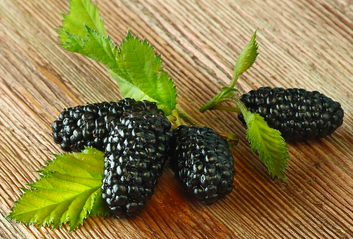
| Botanic name: |
Morus nigro |
| Family |
Moraceae |
| Sun exposure: |
full or dappled sun |
| pH |
6.2-6.8 |
| Soil preference: |
well drained, loamy |
| Lifespan |
up to 1,300 years |
| Fruit bearing |
5-10 years |
| Height |
25 ft. |
July 2026 Plant of the Month
Mulberries
By Mary Loan and Dr Sophia Clark
Mulberries: A
Nutritious and Easy-to-Grow Tree
Mulberries
(Morus
nigra) belong to the Moraceae family, which
also includes jackfruit and
figs. Unlike many berries, mulberries grow on trees
rather than bushes. They
are best known for their delicious fruit and
nutritious leaves, while the
attractive hardwood is prized by artists,
woodworkers, and basket makers. The
leaves and berries provide a valuable food source
for ruminants, and the leaves
are the exclusive food of silkworms.
Three
species of
mulberries are commonly grown—red, white, and black.
This article focuses on
the black mulberry. The berries range from ¾ to 1¼
inches long and have a
sweet, rich flavor similar to blackberries.
Mulberry
trees can be
propagated from seed or from branch cuttings rooted
in pots, preferably at the
beginning of the rainy season. They grow best in
full sun or light, dappled
shade. Once cuttings have developed a healthy root
system—typically within one
to six months—they can be transplanted into
well-drained, loamy soil with a pH
of approximately 6.2 to 6.8.
Keep
in mind that ripe
mulberries leave a deep purple stain wherever they
fall. If left unpruned,
trees can reach 25 feet in both height and width.
Young trees require regular
watering until they become established and develop a
strong root system.
To
grow mulberries from
seed, clean and dry the seeds from fully ripe fruit.
Plant them about ¼ inch
deep in potting soil. Once the seedlings reach at
least six inches in height,
transplant them to their permanent location, spacing
trees about 20 feet apart.
Water well and apply mulch to help retain moisture.
Mulberry
trees are
fast-growing and require little maintenance once
established. Trees grown from
seed or home-rooted cuttings may take five to ten
years to begin producing
fruit. However, many nurseries and garden centers
sell vigorous young trees
that bear fruit much sooner.
Pruning
is strongly
recommended after each harvest to maintain tree
health, encourage new growth,
and improve future fruit production. In our
experience, mulberry trees also
attract climbing vines and volunteer shrubs, making
occasional cleanup pruning
necessary.
Mulberries
are hardy
trees that tolerate poor soils and are naturally
resistant to most insect
pests. Birds—and even some dogs—greatly enjoy the
ripe berries. To discourage
slugs, some gardeners place a ring of fresh wood
shavings about 12 inches from
the trunk.
Both
the leaves and
berries are exceptionally nutritious. The leaves can
be dried and brewed into a
pleasant herbal tea. The berries are rich in
vitamins C and K1 and have been
valued in traditional Chinese medicine for
centuries. They are believed to support
heart health, help regulate blood sugar, and provide
powerful antioxidant
benefits. Eating a handful or two of ripe mulberries
may also help relieve
constipation.
Mulberries are wonderfully versatile in the kitchen. They can be made into pies, jams, syrups, wines, and refreshing beverages. However, many people believe they are at their very best when eaten fresh, right off the tree. Because the berries are delicate and highly perishable, they are seldom found in open-air markets.
An amazing fact:
Mulberry
trees are long-lived and may be productive
for over 1,300 years!
RECIPES
A
simple mulberry jam recipe:
4 cups
ripe mulberries
½
cup water
2
cups sugar
2
TBSP lemon juice
Simmer
until thickened
Pour
into sterilized jars
Mulberry
Leaf Tea
Pick a small
handful of leaves
Simmer
with 2 cups water
for 10 minutes
Drink
hot or cold